Serengeti Wildebeest Migration Safari 10 Days
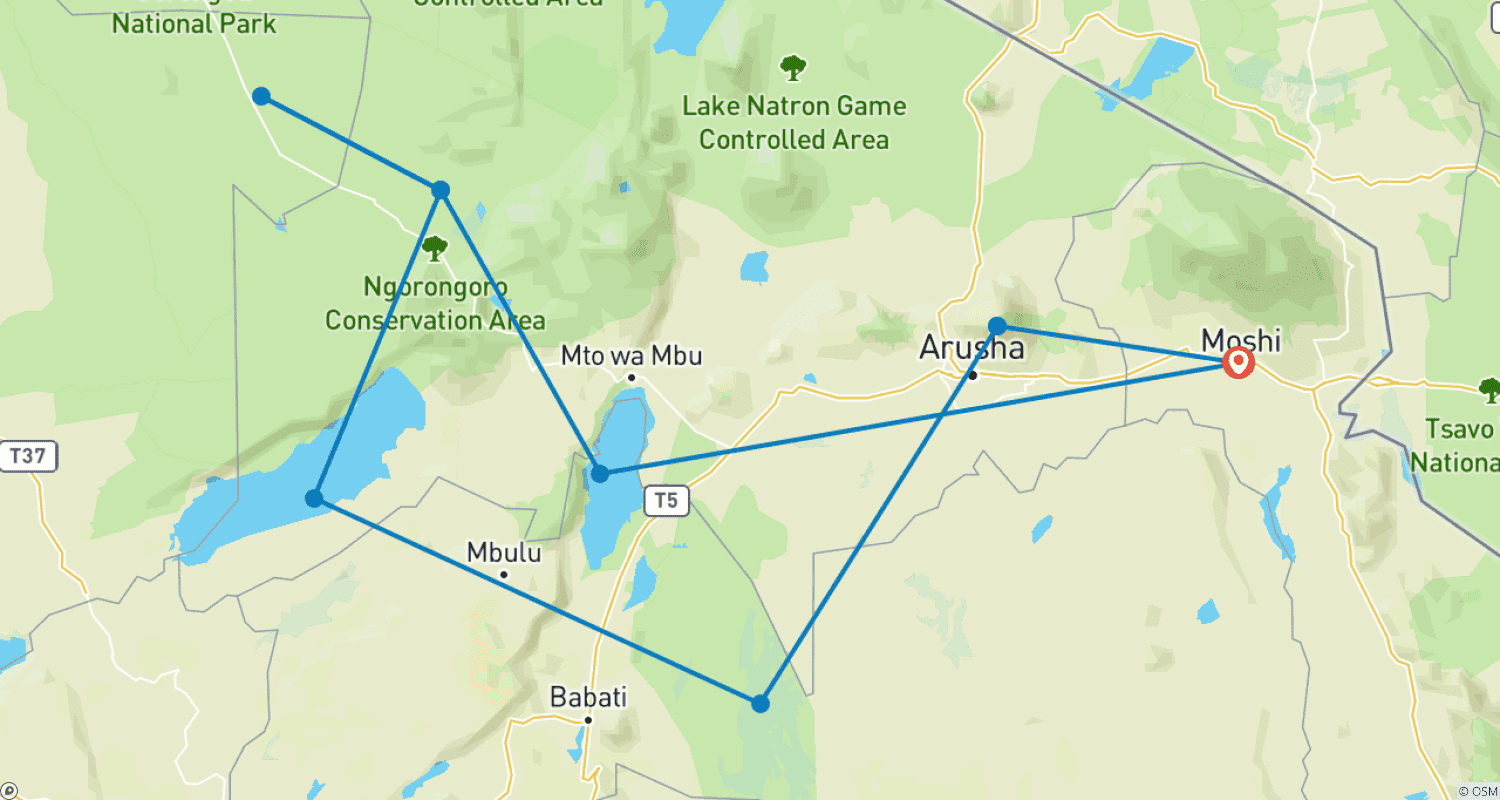
بحيرة مانيارا · حديقة سيرينغيتي الوطنية · منطقة حفظ نغورونغورو · Lake Eyasi · منتزه تارانغير الوطني · Arusha National Park · جبل ميرو · موسي
نظرة عامة على الرحلة
The Seronera Plains, which lie in the southeast of the National park and extend into the western Ngorongoro Conservation Area, form the main ungulate calving grounds of the Serengeti. In January, the massive herds of wildebeest, zebra and gazelle are to be found on the plains of the southern Serengeti.
In February the wildebeest begin foaling and they do this at roughly the same time with all the predators in close attendance. The period between March-April, Heavy rains are approaching and the grazing is starting to get worse. The herd begins to move northwards along the western corridor of the Serengeti.
The actual migration might start any time from late April to early June, with a herd of more than a million migrating animals marching in a braying column of up to 40Km long, one of the most impressive spectacles in the world.
The herd moves towards the Grumeti controlled area where there is still good grazing and they begin to cross the Grumeti river where crocodiles lie in wait for their annual feast and you find the scenes occurring that has made the wildebeest migration famous in so many wildlife documentaries.
From July to October, the ungulates disperse again, with about half of them crossing the Mara River into Kenya’s Masai Mara Game reserve, and the reminder spreading out through the northern and western Serengeti
خط السير يومًا بيوم
After your breakfast, start your safari by driving to lush and beautiful Manyara National Park for game viewing. Lake Manyara National Park is a small but scenic safari park, excellent for bird-watching and a good area to find elephant, as well as the potential excitement of spotting a legendary Lake Manyara tree-climbing lion. At 1300 hrs take your lunch in the park picnic area, evening drive to a Campsite for dinner and overnight.